A gate to the rear court.
Working iron gates, a quieter back elevation, and a walk all the way into the pub.
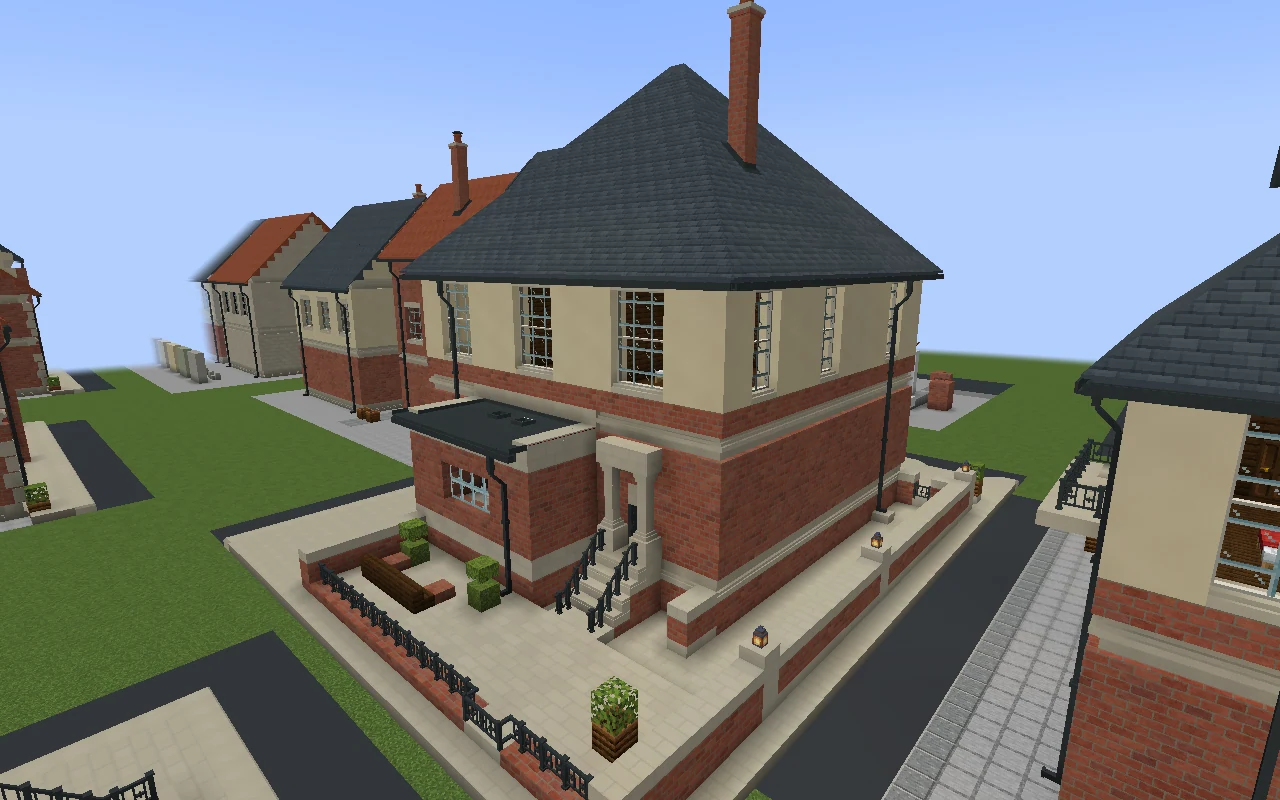
The Lantern & Gear now has a rear court. A narrow gate leads off the pavement into the side passage; a wider pair opens towards the rear lane. Between them are paving, a bench, a little planting and a clear approach to the service stair.
This is a separate copy of the pub. The earlier examples and Nick's original town remain intact.
One gate, two kinds of entrance
The new Cast Iron Gate borrows its bars, small cross details and dark material from the existing railing. One block makes a pedestrian gate. Two compatible leaves form a pair, with the hinges on the outside and no post left in the middle of the opening.
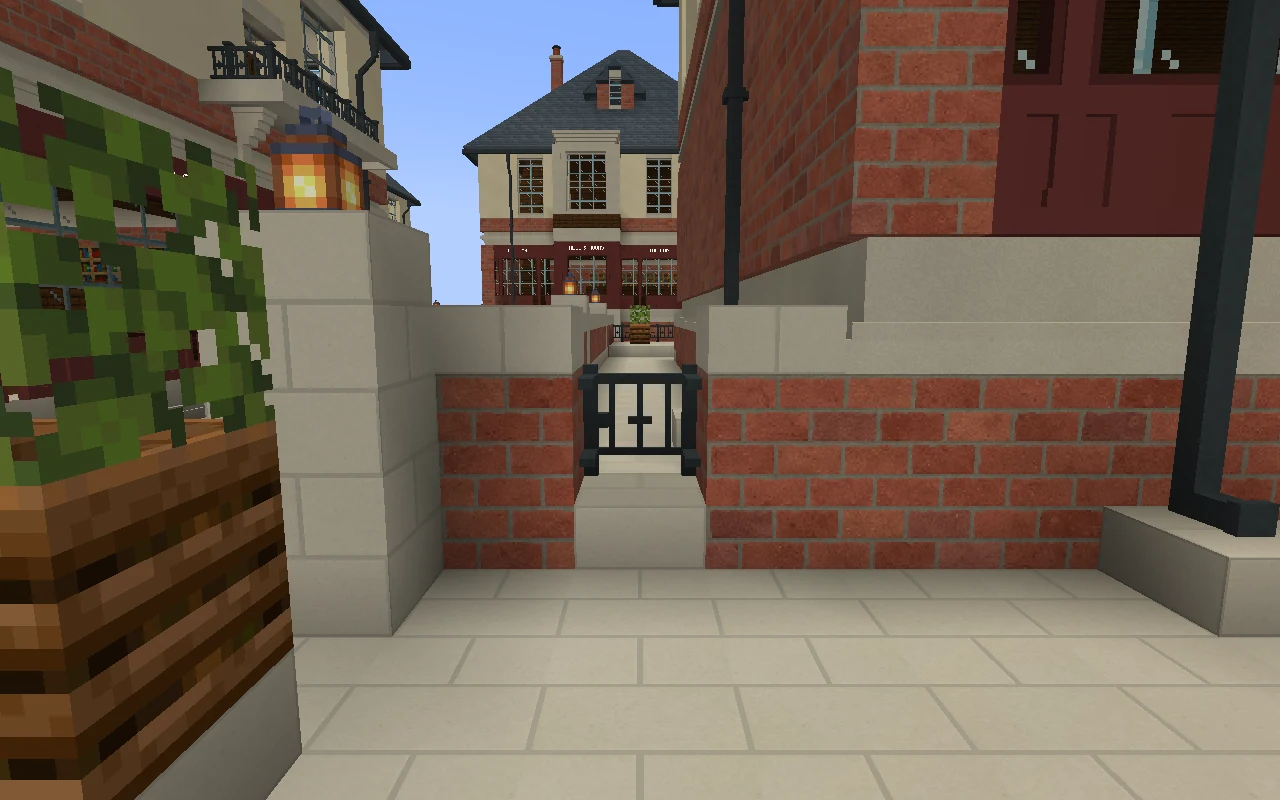
I like the small gate most in context. It gives the long side wall an entrance without demanding another grand doorway. The broader pair suits the court, where the stair and rooflit extension already give the elevation enough detail.
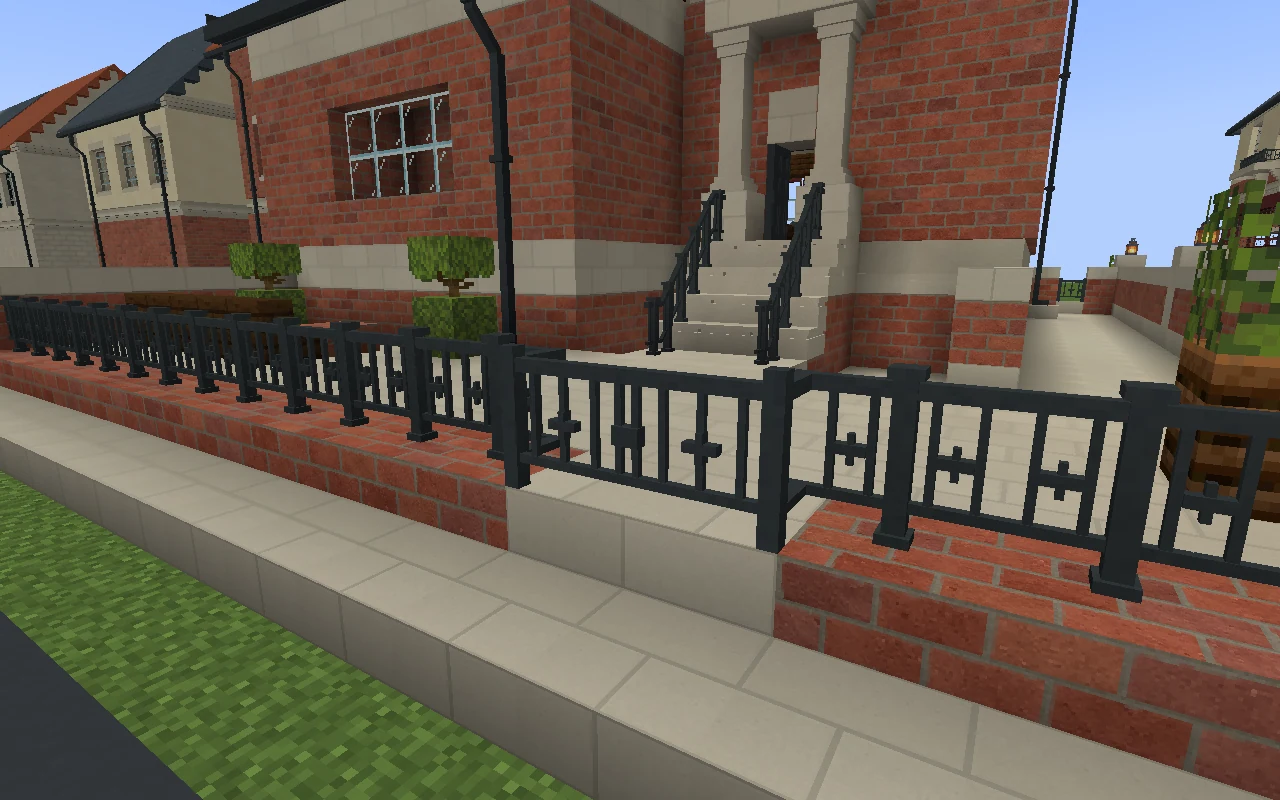
An ordinary click operates the pair. The Create wrench changes the hinge when used on the broad leaf face, or rotates the gate when used on an edge, top or bottom. Sneak-wrenching recovers one leaf. Redstone can operate the entrance, and a manual click can override steady power until the next power change.
The frame stays put
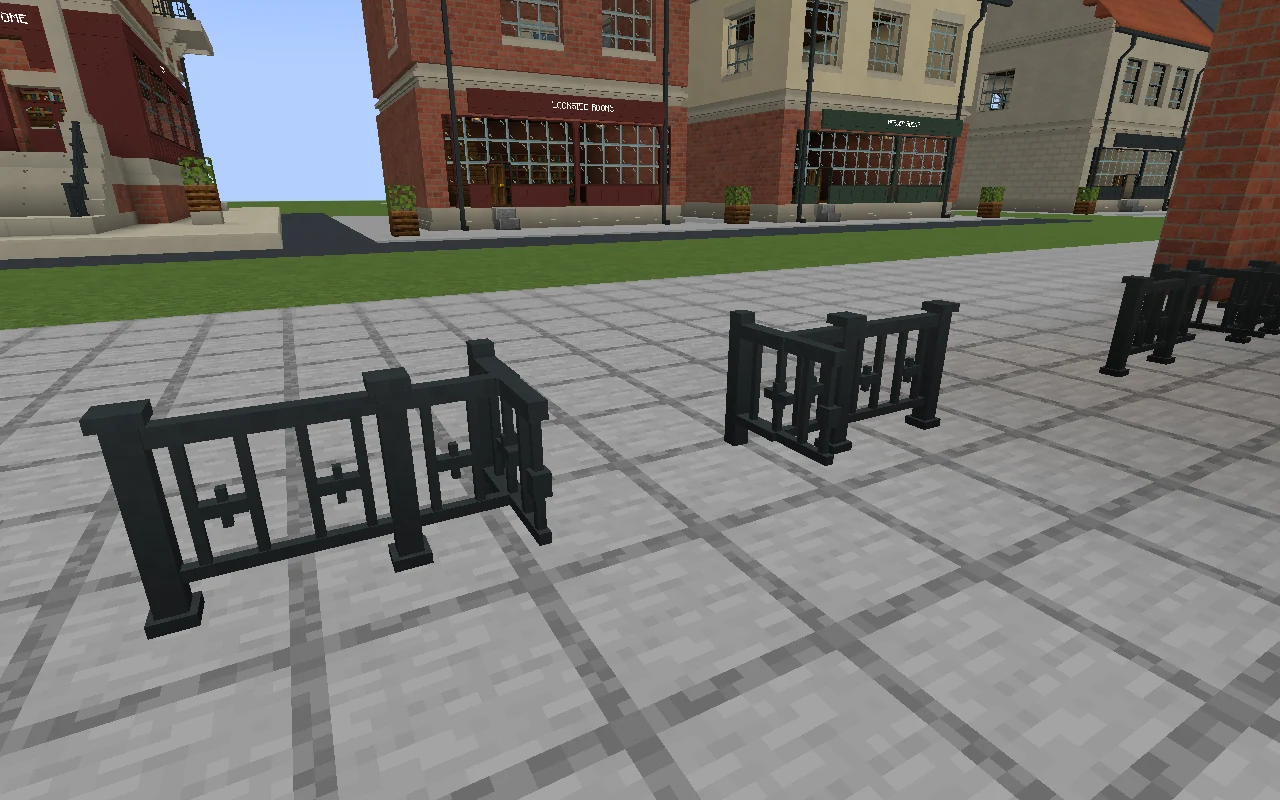
The first native review found a useful mistake. Minecraft walls lower a gate, and I had lowered its mounting frame too. That left a visible gap where it met a full-height railing.
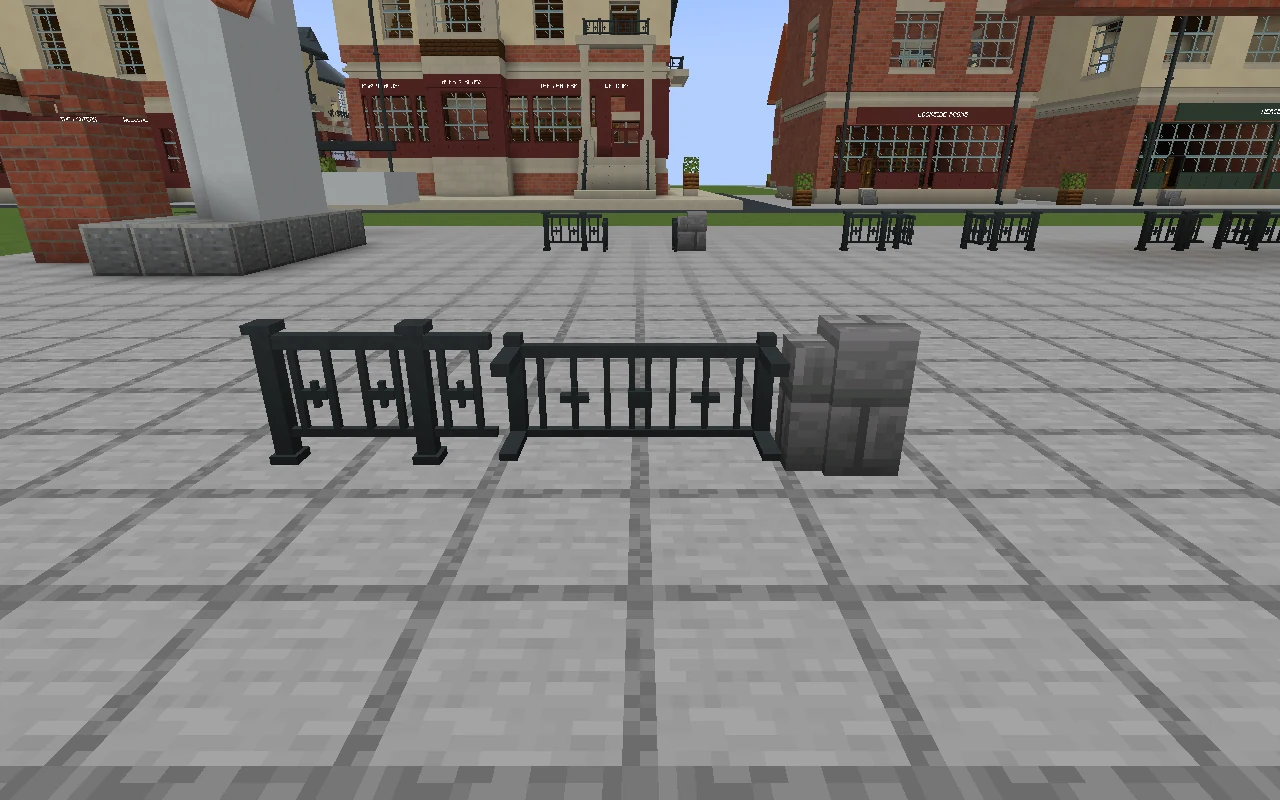
The correction separates those jobs: the leaf lowers, while the posts and short attachment rails keep their contacts. It works even with a wall at only one end of a pair.
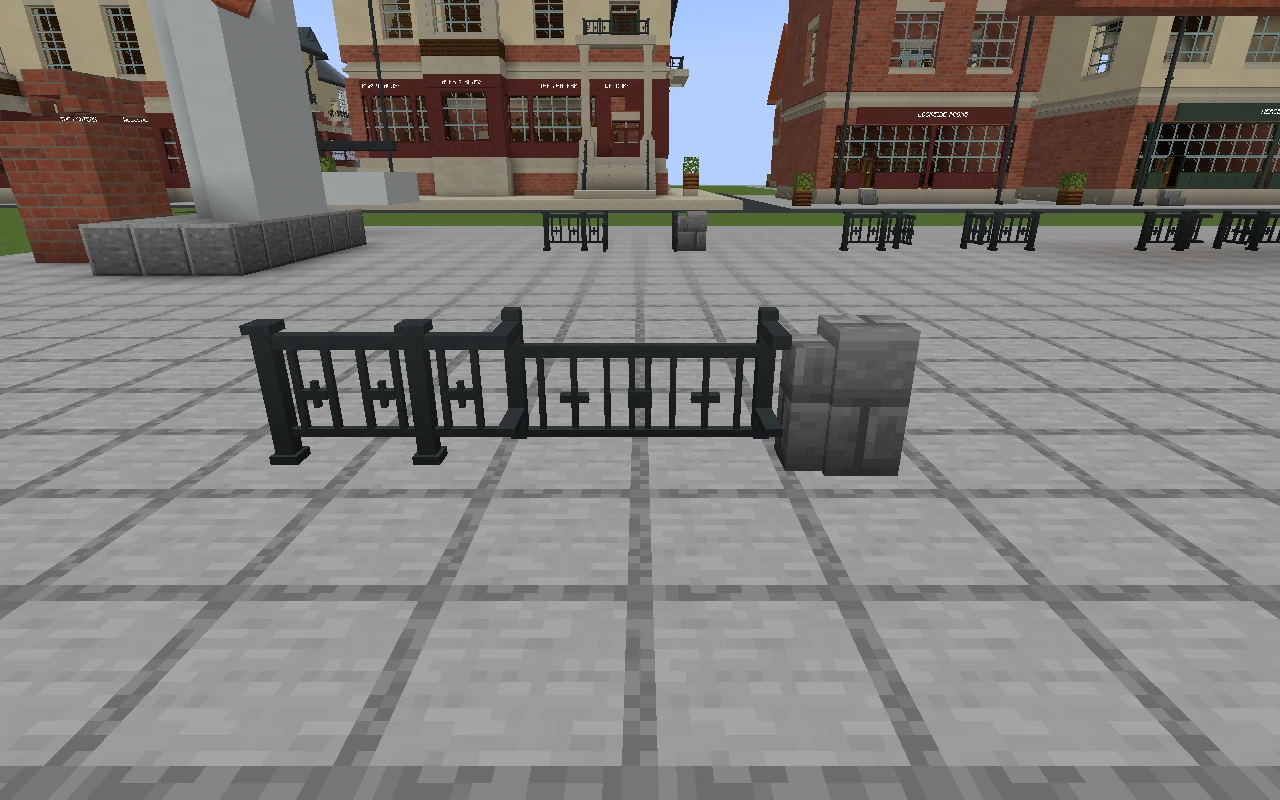
This is why I keep returning to awkward joins. A gate on its own was convincing; a gate between two different neighbours exposed the missing rule.
Walk the back of the building
The court uses the existing palette. Its bench sits beside the annex, away from the stair. Two planters moved because they obstructed the side passage. The drainage and raised service entrance remain visible and accessible.
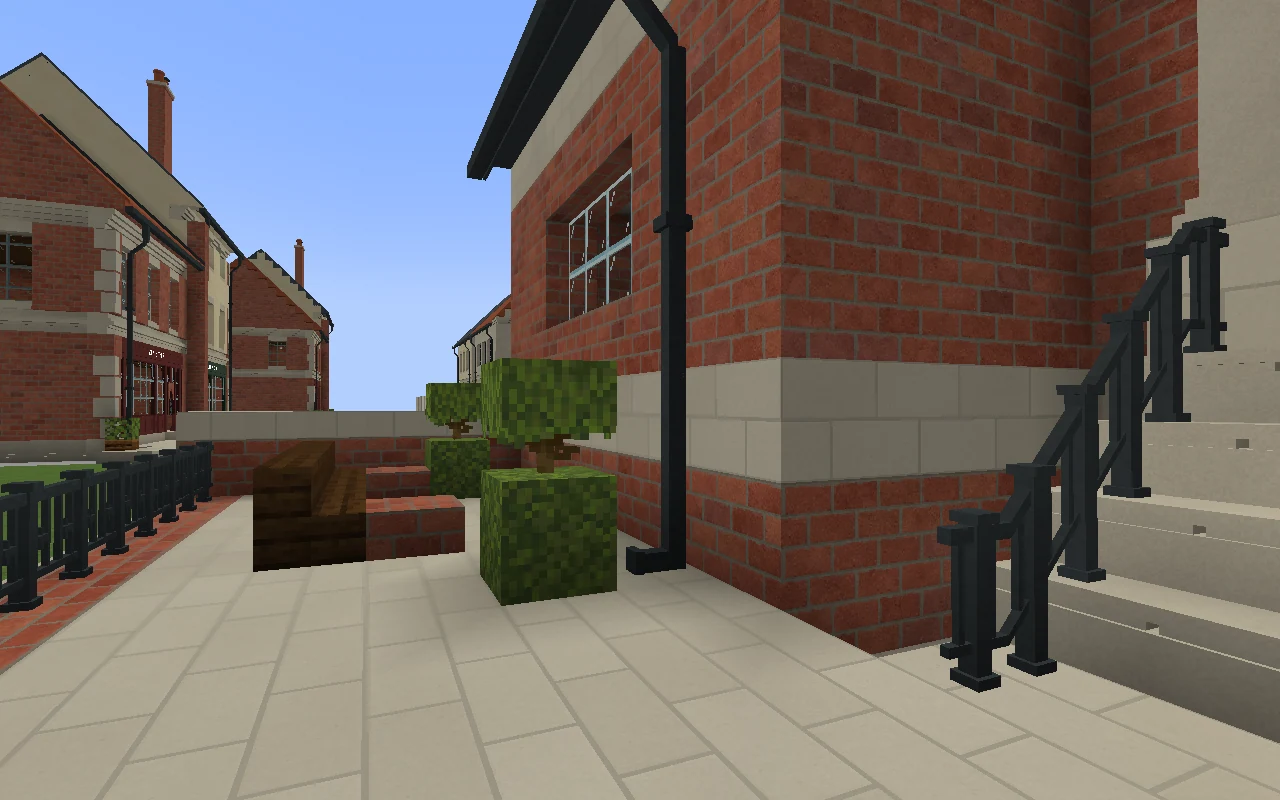
The route is checked by moving an actual server-side player through normal collision: through the small gate, along the passage, out and back through the pair, around the foot of the stair rail, and up into the pub. The first walking test was too strict about a normal landing step; the next waypoint tried to cross a guardrail sideways. Both failures were kept and corrected. The final continuous walk passes without teleporting between its six legs.
That is useful collision evidence. It does not establish keyboard play over a network or villager navigation.
A seventeenth Ponder
The gate lesson demonstrates the moving leaves, pairing, wrench controls, power, wall contact and recovery. It also teaches the distinction that matters here: rotating a gate and choosing its hinge are separate operations.
The combined candidate passed the isolated full pack, resource reload and a real save-and-reopen cycle. Twelve complete building examples survived that reopen, including every authored block and saved payload in the new court. Separate checks cover rotated and mirrored Create copies, partial pairs, waterlogging and saved powered states.
This is an accepted development checkpoint. The installed release remains 0.12.0; there is no public mod download. The next pass is smaller but important: correcting an older door-wrench interaction and giving a few crowded Ponder scenes more room. Real network clients and town-scale performance are still ahead.