Doors that belong to the building.
Painted leaves, glass that moves with the door, and entrances that match the rest of the joinery.
Development from September 13, 2026 · Written up September 30, 2026 from the milestone records.
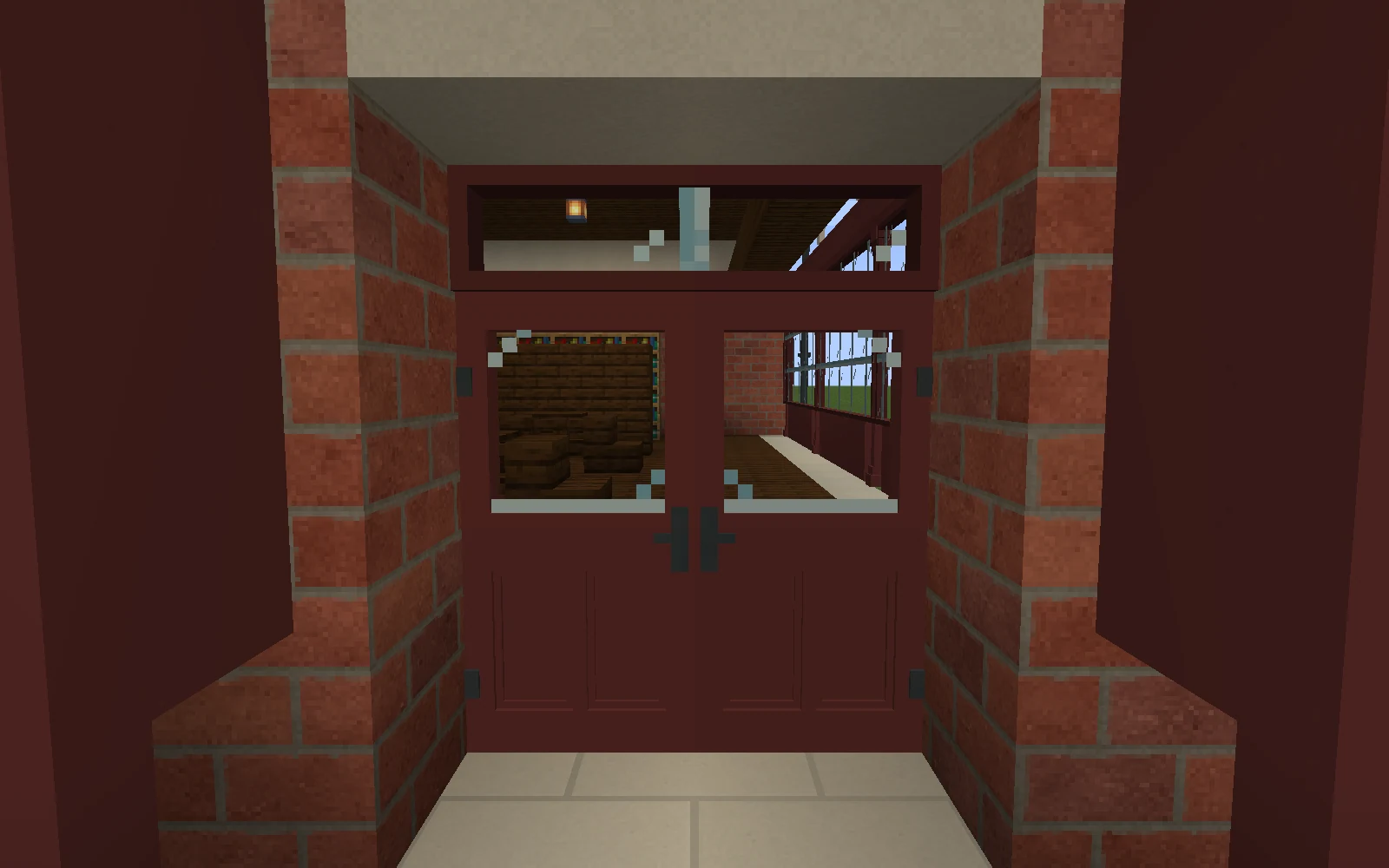
A carefully framed shop entrance is an awkward place to run out of matching parts. Build 0.11.0 introduces working painted panelled and glazed doors, using the same timber paints as the surrounding joinery.
Each is a two-block door. Matching leaves can form a pair, and inserted glass moves with its leaf. Paint and pane choice stay independent, so a shopfront can keep its colour without forcing one glazing style.
Familiar controls matter
Ordinary right-click opens or closes the door. A supported pane inserts into the glazed version. White, green, red and black dyes select Ivory, Deep Green, Oxblood and Charcoal.
Create's wrench remains the main adjustment tool. Use a broad face to change the hinge, or an edge to rotate the leaf. Sneak-wrench recovers inserted glass first; an empty leaf can then be picked up. Matching paired doors also respond to redstone.
The details matter because a door is something players touch constantly. Its controls should be predictable without another special-purpose tool on the hotbar.
The entrance is an assembly
I am most pleased with the relationship between the door and the pieces around it. The existing fanlight, sidelights, brick returns and threshold all have to meet the closed leaf at the right depth. The pub example gives that problem a real entrance to solve.
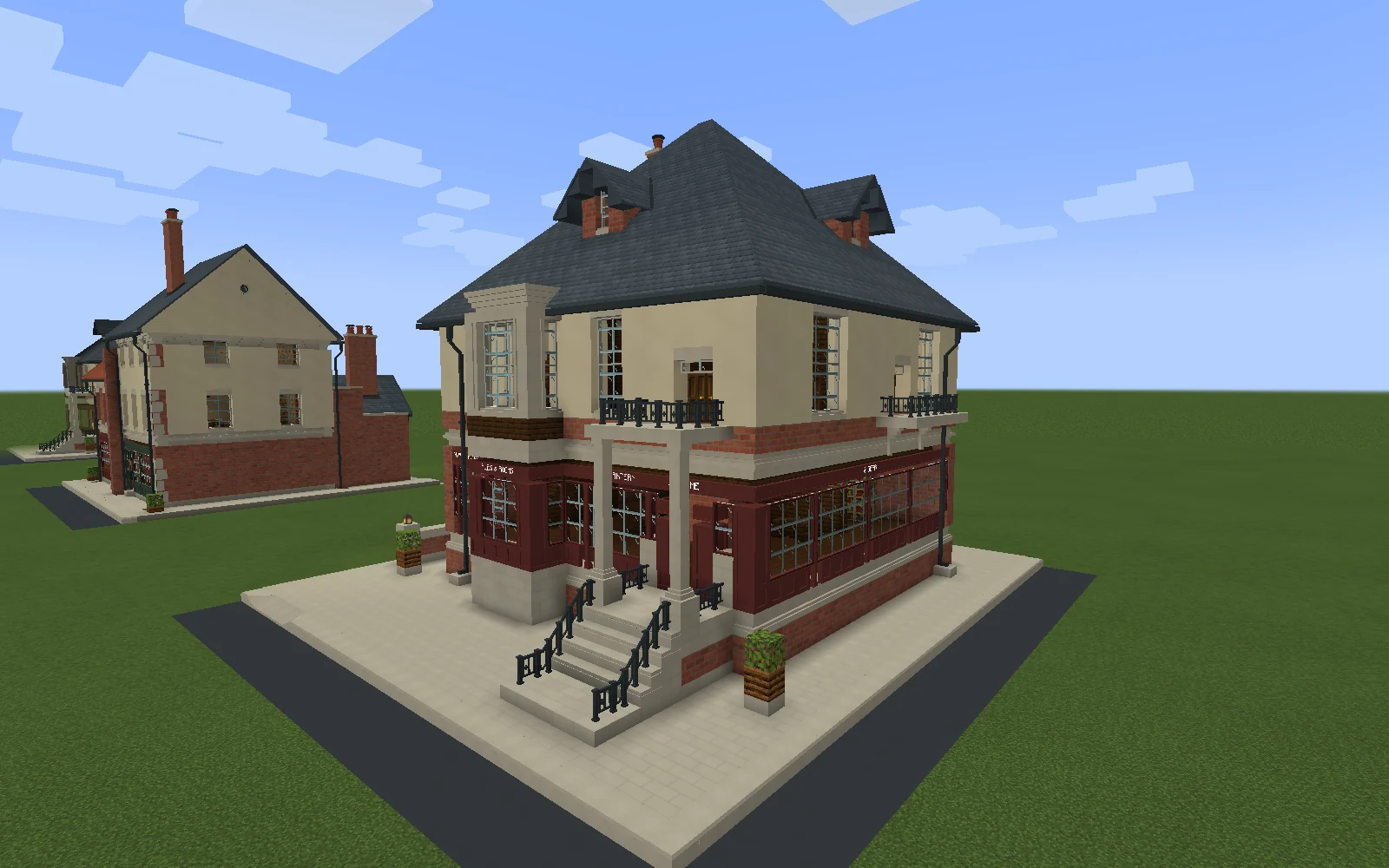
The same building uses different leaves for the balcony and service entrance. That is the useful test: whether the kit still makes sense away from its most flattering shopfront view.
A limitation worth keeping visible
Manual Survival insertion records the paid pane for recovery. Create schematic copies preserve appearance, but a pane printed by the schematic cannon currently does not receive that same recoverable payment credit. Removing that printed pane therefore does not reimburse it.
That is unfinished compatibility work. The journal should say so alongside the attractive screenshot.
The completed local release passed native door interactions, full-pack visual review, resource reload and saved-building reopen checks. It also contains the flat-roof and rooflight kit, developed later in the same milestone.